
I am always delighted when I find good figures and tables in a proposal I review. Though sometimes, although the authors have clearly taken a lot of time to develop a figure, I am still puzzled what they are showing me. When I follow up, I tend to get one of two types of answers: (1) That’s a standard figure, everyone in the field knows and understands it. As I am rarely “in the field,” I take it to mean that I am not worthy of an explanation. (2) The author is disappointed and declares that she will start over and try something completely different. But wait, the the solution is so much easier and here is how to fix it.

Keep in mind that most of your reviewers are not in your field. They are the opposite to the audience of your science papers where an expert (you) writes for other experts (your colleagues). By the time a funding agency works their way through all the potential conflicts of interests, the available reviewers usually have only a vague familiarity with your field. They are still experienced professionals and prefer to be treated as such. So please refrain from starting your explanation somewhere around the formation of the first hydrogen atoms, but instead offer some simple bridges into your field. It’s like a good host meeting their guests at the door and guiding them in where the party is. Isn’t that so much nicer than stumbling through an empty house in search for the back yard just to realize that you walked into the wrong house?
A considerate, and therefore more likely to be to successful, proposal writer pairs their illustration or table with a concise caption that tells the reader why it is deserving of their time and attention. Novice proposal writers usually feel compelled to use the precious caption space describing what the figure shows. Wasting great space because the figure usually is much better at doing that job. The result is the dreaded “horse caption.” If you haven’t heard that term yet, just imagine a picture of a horse with the caption: “This is a horse.” You think this doesn’t happen? Have you ever seen or written captions like: budget table, performance data, team organization? This is especially pervasive, if the table is required by the call for proposals. What else are you supposed to say about it? They asked for it and here it is.
That would be all fine, if good enough proposals would get funded. Unfortunately, such times, if they ever existed, are long gone. The proposals that are funded today are almost without exception excellent or outstanding. And those aren’t just hyperbolic assertions by the sponsors. The bar is really that high. That’s why you owe it to your brilliant idea to be presented in the best possible light. If anyone can wrap a bad idea in a nice package why shouldn’t you do this with your amazing idea? Good captions are like the cherry on top of a sundae. Can you do without them? Maybe. But why would you?
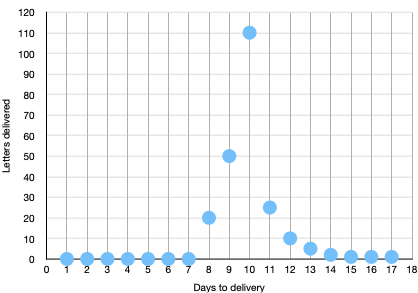
Some of the best captions are action caption. An action caption follows the simple patter of: feature, benefit, proof. They highlight a key feature or aspect of your proposal (say a horse-mounted mail carrier) and connect it to a benefit to your sponsor (say speedy, reliable letter delivery from Missouri to California). You finish it up with graph that shows proof of your claim.
In your next proposal, let your figures do the heavy lifting of showing what the relevant data are. Then pair each figure with an action caption laying out why you are including it. Every figure should strengthen your case for getting selected and funded. Even if you know that you have a strong case, you still have to convince the the non-expert reviewer. Captions are a great tool to increase your chances. Don’t miss out on them.

 Rolf Danner